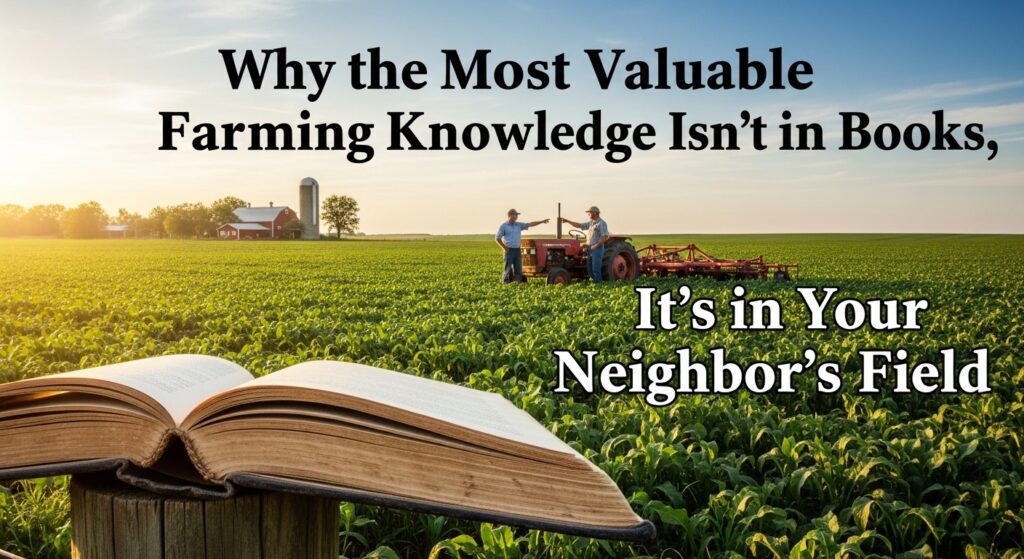
The farmer 10 kilometers from you just solved the exact problem you’re struggling with. But you’ll never know, because there’s no way to find out what’s working on farms around you.
Every farmer faces challenges, pest outbreaks, soil problems, marketing difficulties, and new techniques to try. And somewhere, another farmer has already solved that specific problem in similar conditions. They’ve tested the solutions, made the mistakes, learned what works and what doesn’t.
This knowledge is incredibly valuable because it’s proven, practical, and relevant to your specific region and conditions. But traditionally, this knowledge remains trapped on individual farms, shared only with immediate neighbors or family. The farmer with the perfect solution to your problem might be just a few kilometers away, but you’ll never benefit from their experience.
This is why community-powered farming knowledge is transforming agriculture. By connecting farmers to share experiences, solutions, and insights, we’re creating a collective intelligence that makes every farmer smarter and more successful.
The Isolation Problem in Modern Farming
Farming can be profoundly isolating. You’re often working alone, making dozens of decisions daily without input from others facing similar challenges. When problems arise, a new pest you don’t recognize, declining yields you can’t explain, financial pressures you’re not sure how to handle, you’re largely on your own to figure things out.
Traditional knowledge-sharing mechanisms have significant limitations. Extension services are underfunded and stretched thin, with one agent serving hundreds or thousands of farmers. Face-to-face farmer meetings require travel, happen infrequently, and reach limited numbers. Market day conversations are valuable but unsystematic and random. Successful farmers nearby might be competitors rather than collaborators, reluctant to share their “secrets.”
The internet promised to solve this by connecting everyone, but most online agricultural information is generic, written for different regions or farming scales, or focused on commercial operations rather than smallholders. It doesn’t address your specific local conditions, crops, and challenges. You need knowledge from farmers facing similar situations to yours, not textbook advice from halfway around the world. This knowledge gap costs farmers enormously. You repeat mistakes others have already made and learned from. You struggle with problems someone nearby has already solved. You miss opportunities that other farmers are already exploiting. You feel isolated and unsure whether your challenges are unique or universal. This isolation isn’t just emotionally draining, it’s economically costly and professionally limiting.
How Community Knowledge Sharing Works
Modern farmer community platforms create structured knowledge exchange that captures and shares proven farmer wisdom at scale. Here’s how it transforms traditional isolated farming:
Question and Answer Forums allow any farmer to ask specific questions about their challenges. “My tomato leaves are yellowing from the bottom up. Pest or nutrient problem?” Within hours, farmers who’ve faced this exact issue respond with their experiences, photos of what worked for them, and specific advice. These answers come from real farmers in similar conditions, not generic textbook responses.
Agricultural experts and extension agents also participate, providing professional guidance alongside peer farmer advice. The most helpful answers get upvoted by the community, so proven solutions rise to the top. The entire conversation is searchable and permanent, building a knowledge library that future farmers can reference when facing the same issue.
Success Story Sharing lets farmers document what worked on their farms. “I increased maize yield by 40% using this simple intercropping technique” with details and results. Other farmers can learn from these successes, adapting proven techniques to their own operations. This creates a culture of sharing and celebration of innovation that benefits everyone.
Local Farmer Groups organize members by region, crop type, or farming approach (organic, small-scale, commercial, etc.). These groups enable more focused conversations among farmers with very similar conditions and challenges. A maize farmers’ group in Western Kenya discusses challenges and solutions highly relevant to that specific context, while cassava farmers in Nigeria have their own focused community addressing their particular needs.
Real-Time Problem Solving happens when urgent issues arise. “I’m seeing strange insect damage in my beans, anyone else seeing this?” Nearby farmers respond immediately: “Yes! We had it last week. It’s a bean fly. Here’s what worked for us.” This real-time intelligence enables rapid response to emerging threats that might devastate crops if you wait days or weeks for extension service visits or textbook research.
Marketplace Integration connects farmers for input purchases (group buying for discounts), output sales (connecting with buyers or cooperatives), and equipment sharing (farmers sharing expensive equipment they can’t afford individually). This economic dimension makes the community immediately valuable beyond just knowledge sharing, creating tangible financial benefits from participation.
The Power of Crowd-Sourced Intelligence
When thousands of farmers contribute their observations and experiences, patterns emerge that individual farmers would never see alone. This crowd-sourced intelligence creates powerful early warning systems and collective problem-solving capacity.
Pest and Disease Early Warning: When multiple farmers in a region report similar pest observations, everyone in that area receives alerts. “Five farmers within 20km of you reported armyworm in maize fields in the last 48 hours. High probability it will reach your area soon. Prepare monitoring and response.” This community-powered early warning gives you days to prepare for threats heading your way, based on real-time observations from nearby farms.
Weather Pattern Verification: Individual farmers see their local weather, but community-level pattern recognition reveals broader trends. “Farmers across the region reporting heavier-than-forecast rainfall. Adjust irrigation plans and prepare for potential waterlogging.” This collective intelligence supplements official forecasts with real-time ground truth from farmers actually experiencing conditions.
Input Effectiveness Feedback: When dozens of farmers test new seed varieties, fertilizers, or techniques, collective results reveal what actually works. “Maize variety XYZ performs 30% better than traditional varieties across 50 farms in this region with similar conditions.” This crowd-sourced field trial data is incredibly valuable for decision-making, showing you what’s proven to work for farmers like you, not just what seed companies claim.
Market Intelligence: Farmers sharing market prices and buyer relationships creates price transparency and negotiating power. “Tomatoes are selling for 80 shillings/kg in Nairobi market today, but only 55 at the local market. Worth the transport cost.” This real-time market intelligence helps farmers make better selling decisions and avoid exploitation by middle-men offering artificially low prices.
Crisis Response Coordination: When disasters strike: floods, droughts, disease outbreaks and connected farmer communities coordinate response. They share resources, pool knowledge about what’s working, and provide mutual support during challenging times. This collective resilience makes everyone more capable of surviving and recovering from crises.
Learning from Other Farmers’ Mistakes
Success stories are inspiring, but learning from others’ mistakes is equally valuable. A farmer community where people honestly share what didn’t work saves everyone from repeating those mistakes.
“I tried planting beans in a low-lying field during the rainy season. Complete failure due to waterlogging. Don’t make my mistake, beans need well-drained soil especially during heavy rains.” This candid sharing prevents others from making the same costly error. “I bought a cheap Chinese water pump. Broke after three months. Waste of money. Stick with reputable brands even if they are more expensive initially.” This warns others away from false economies that seem attractive but prove costly.
“I expanded too fast, taking large loans. Couldn’t manage all the land properly. Lost money. Expand gradually instead.” This financial wisdom prevents others from overextending themselves with similar disasters. Most farmers are reluctant to publicize their failures in person, but anonymous or pseudonymous community platforms allow honest sharing without embarrassment. This creates an invaluable library of lessons learned the hard way by others, protecting you from the same painful experiences.
Finding Your Farming Mentor
Traditionally, farming mentorship happened within families or close neighbors. But community platforms enable mentor-mentee relationships to form based on actual expertise and farming approach rather than geographic proximity alone.
Experienced successful farmers can mentor newer or struggling farmers, sharing decades of accumulated wisdom efficiently through the platform. Organic farmers can connect with others pursuing similar approaches, even if they’re the only one in their immediate area. Farmers trying specific techniques (intercropping, conservation agriculture, integrated pest management) can find and learn from others with relevant experience regardless of location.
These mentorship relationships develop naturally through ongoing community interaction. A newer farmer asks questions, and an experienced farmer consistently provides helpful answers. Trust and relationships develop over time through valuable exchanges. Eventually, direct mentor-mentee relationships form that provide ongoing guidance, encouragement, and expertise sharing.
The platform makes these connections possible that would never happen through traditional geographic-limited networking. A young farmer in Tanzania learns from an experienced farmer in Kenya with perfect experience in exactly the challenges she faces. Neither would ever meet without community connectivity, but now expertise flows freely across borders and distances to benefit everyone.
Specialized Knowledge Communities
Beyond general farming forums, specialized communities address specific interests or approaches that attract passionate farmers with deep expertise in particular areas.
Organic Farming Communities connect farmers committed to chemical-free production, sharing natural pest control methods, organic fertilization techniques, certification processes and requirements, and market access for organic products. These farmers face unique challenges that conventional farmers don’t understand, so connecting with others pursuing organic approaches is invaluable.
Livestock and Mixed Farming Communities address the specific challenges of animal husbandry: veterinary care, feed management, breeding strategies, and integrated crop-livestock systems. Livestock farmers have questions and challenges quite different from crop-only farmers, so specialized communities provide focused, relevant knowledge exchange.
Women Farmers Networks create spaces for women in agriculture to discuss challenges they specifically face, share strategies for accessing land and credit, support each other’s business development, and build leadership and advocacy capacity. Women farmers often face unique barriers and benefit enormously from connecting with other women succeeding in agriculture.
Youth Farmer Groups connect young farmers embracing modern techniques and technology, entrepreneurial approaches to agriculture, access to land and starting capital, and making farming attractive and profitable for the next generation. Young farmers approach agriculture differently than older generations, and communities of similar-aged peers foster innovation and mutual support.
Crop-Specific Communities (maize farmers, vegetable growers, coffee producers, etc.) provide highly focused technical discussions about specific crop management, pest and disease challenges unique to particular crops, market opportunities and buyer relationships, and varietal performance and selection for those crops specifically.
Building Social Capital and Relationships
Beyond immediate knowledge transfer, farmer communities build social capital, relationships, trust, networks, and reputation that have lasting value beyond any single transaction or question.
Farmers who actively participate, share helpful knowledge, and contribute solutions build reputation within the community as knowledgeable and trustworthy. This reputation opens doors to opportunities, buyers seeking reliable suppliers, cooperatives seeking skilled farmers, NGO programs seeking progressive farmers, and leadership roles within farmer organizations.
The friendships and relationships formed through community interaction provide emotional support and a professional network that extends beyond the platform. Farmers facing challenges have people they can call for advice, encouragement, or practical help. These relationships combat the isolation of farming and create genuine community among people who understand the challenges you face because they’re living them too.
Social capital translates to economic opportunity as well. Farmers trusted within the community get first access to bulk input purchases, connections to premium buyers, referrals for good extension services or suppliers, and invitations to collaborative projects or training opportunities. Being well-connected and respected within farmer networks has tangible financial value beyond just knowledge gained.
Creating Value While Sharing Knowledge
Some farmers worry that sharing their “secrets” and best practices will create competition. But the reality is the opposite, communities create far more value than they extract.
Knowledge sharing raises the performance of everyone, making the entire regional agricultural sector stronger and more attractive to buyers, processors, and investors looking for reliable supply from competent farmers. Collective quality improvement opens premium markets that won’t work with just one or two good farmers, they need scale and consistency across a region, which only happens through knowledge diffusion that raises everyone’s capabilities.
Your participation in the community builds your reputation and network in ways that create unique opportunities. Buyers looking for progressive farmers find you through your community activity. Extension programs select participants based on demonstrated engagement and willingness to learn. Leadership opportunities emerge for farmers who actively contribute to community knowledge and help others succeed.
The challenges farmers face are not zero-sum competition. Your success doesn’t require your neighbor’s failure. In fact, successful neighbors often create opportunities, cooperatives need multiple quality farmers, bulk buyers need volume that one farm can’t provide, and local agricultural success attracts infrastructure, services, and investment that benefit everyone in the area.
And fundamentally, the knowledge you share is never as valuable to others as the knowledge you receive. You share your specific experiences, but you gain insights from hundreds or thousands of other farmers. The exchange is always massively in your favor when you participate actively in community knowledge sharing.
Getting Started with Community Farming Knowledge
Week 1: Explore and Observe by joining Agrosenix farmer communities relevant to your crops, region, and interests. Browse existing discussions to see what people are talking about. Search for topics you’re curious about and chances are someone has already asked your questions. Read success stories from farmers with operations similar to yours. Get familiar with community culture and how people interact before jumping in yourself.
Week 2: Ask Your First Question by posting a specific, clear question about a current challenge you’re facing. Include photos if relevant (pest damage, soil conditions, crop symptoms). Provide context about your location, crops, and situation to get more relevant answers. Check back to see responses and engage with people who answer you, asking follow-up questions to deepen understanding.
Week 3: Share Your Experience by responding to a question where you have relevant experience to offer. Share what worked (or didn’t work) on your farm with details. Don’t worry about being an “expert”, your actual farming experience is valuable to others facing similar situations.
Week 4+: Become an Active Member by participating regularly and checking the community several times per week. Building relationships with other farmers through ongoing helpful interactions. Documenting and sharing your farming activities and results with the community. Asking for input on major decisions before you make them, leveraging collective wisdom. Offering to help nearby farmers who post questions you can assist with directly.
The Platform: How Agrosenix Community Works
Agrosenix farmer community provides comprehensive knowledge-sharing infrastructure designed specifically for real farmers, not generic social media adapted for agriculture.
Question and answer forums use structured categorization by crop, region, topic, and season so you find relevant discussions easily. Smart search functionality helps you discover existing knowledge before asking duplicate questions. Expert verification ensures agricultural professionals’ answers are highlighted and trustworthy. Mobile-optimized interface works perfectly on smartphones, even with slow rural internet connections.
Local group organization automatically suggests communities based on your crops and location, connecting you with the most relevant farmers. Private and public spaces balance open knowledge sharing with closed groups for sensitive topics or exclusive collaborations.
Offline functionality means you can browse saved community content even without internet connection, with automatic sync when connectivity returns. You’re never locked out of valuable community knowledge due to rural connectivity challenges.
The notification system ensures you never miss responses to your questions or important discussions in your communities. You control how you’re notified (push notifications) to stay engaged without being overwhelmed.
Integration with farm management means community discussions connect directly to your farm activities. When you log a pest problem on your farm, you’re prompted to ask the community for help. When community members share solutions, you can log implementing them on your farm and track results.
The Future of Farming is Connected
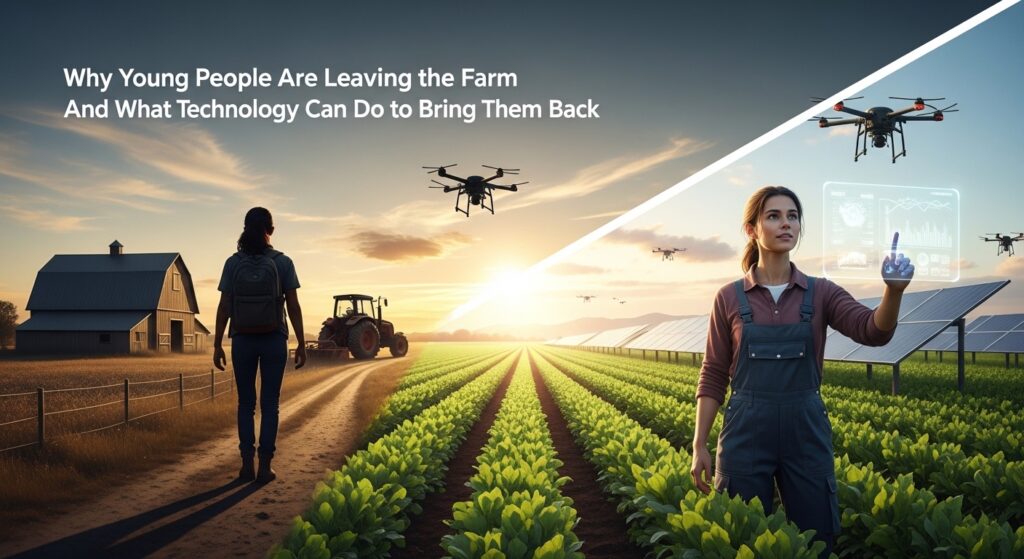
Agriculture’s future isn’t solitary farmers working in isolation. It’s connected communities sharing knowledge, supporting each other, and collectively building expertise that makes everyone more successful.
Farmers who embrace community connection today are positioning themselves for long-term success by continuously learning from hundreds of other farmers’ experiences, building valuable networks and relationships that create opportunities, staying current with innovations and techniques that work, accessing collective bargaining power and market intelligence, and feeling supported rather than isolated in the challenging work of farming.
Meanwhile, farmers remaining isolated are falling behind, repeating mistakes others have already made and learned from, missing innovations that could transform their profitability, feeling alone with challenges that are actually universal and solvable, and lacking the social capital and networks that increasingly drive opportunity in modern agriculture.
The most valuable farming knowledge isn’t in textbooks, it’s in the practical, proven experience of farmers doing the work every day. Community platforms like Agrosenix finally make this knowledge accessible to everyone who needs it.
Join the farming community that’s transforming agriculture through shared knowledge.
Your neighbor 10 kilometers away just solved your problem. With Agrosenix, you’ll know about it tomorrow.
Connect, Learn, and Grow with Agrosenix Community
Agrosenix brings farmer-to-farmer knowledge sharing to every farmer through question and answer forums where real farmers help each other, expert agricultural advice from verified professionals, local farmer groups organized by crop, region, and farming approach, success story sharing that spreads innovation and best practices, real-time pest and market alerts from community observations, offline access so you’re never locked out by poor connectivity, and integrated farm management where community knowledge connects directly to your farming activities.
Stop farming alone. Start farming together.
Ready to join a community of farmers sharing knowledge and success? Download the Agrosenix beta app and join the conversation today. Free during beta. Works offline. Built for farmers who help each other.
The best farming knowledge is already out there. Now you can access it.