A Different Kind of Farm
There is a particular kind of pressure that farmers understand well. The season does not wait. Crops do not pause because you are tired, or because a worker did not show up, or because you are already stretched across three other urgent tasks at once.
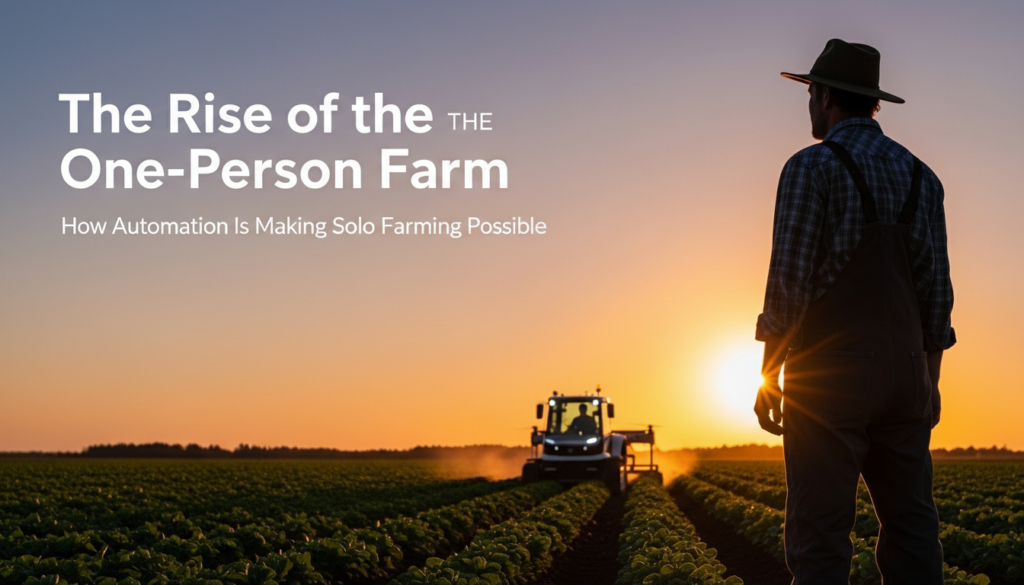
For generations, the answer to this pressure was simple: more people. More hands meant more work could get done. Planting, monitoring, irrigation, harvesting, all of it was distributed across a team. The farm scaled with its labour force. That model is under strain. Labour is harder to find, more expensive to retain, and increasingly unreliable in seasonal peaks. And yet the land still needs to be managed. The crops still need attention. What is emerging in response is not larger teams, it is smarter farms. Farms where one person, or a very small team, can manage an area that would once have required many. This is the rise of the one-person farm, and technology is what makes it real.
The Traditional Dependency on Numbers
To understand why this shift matters, it helps to look at where the labour actually goes on a traditional farm. A significant portion of farm labour is spent on observation. Walking fields to check on crop health, soil moisture, irrigation, pest pressure, and general progress. This is important work, but it is also repetitive, time-consuming, and largely about gathering information that then informs a decision made elsewhere.
Another large portion goes into coordination. Organising who does what, when, and where. Communicating changing conditions. Managing the timing of multiple tasks happening across different areas of land simultaneously. And then there is documentation or more often, the absence of it. When records depend on memory and handwritten notes, maintaining them consistently requires dedicated time and effort that is rarely available. Each of these areas, observation, coordination, and documentation, can be substantially supported by technology. When they are, a single farmer’s effective capacity expands significantly.
What Changes When Technology Steps In
The transformation does not happen all at once. It begins with visibility. When a farmer can see the state of their fields through a digital system, what was planted, when, at what cost, with what outcomes they stop carrying all of that information in their head. The mental load decreases. The clarity increases. With that clarity comes better planning. Tasks can be scheduled around actual conditions rather than assumptions. Resources are allocated where they are genuinely needed. Time stops being wasted on problems that could have been anticipated.
This first step alone the step from scattered information to organised data changes what one person can reasonably manage. Not because they work harder, but because they no longer work in the dark.
Managing More by Monitoring Better
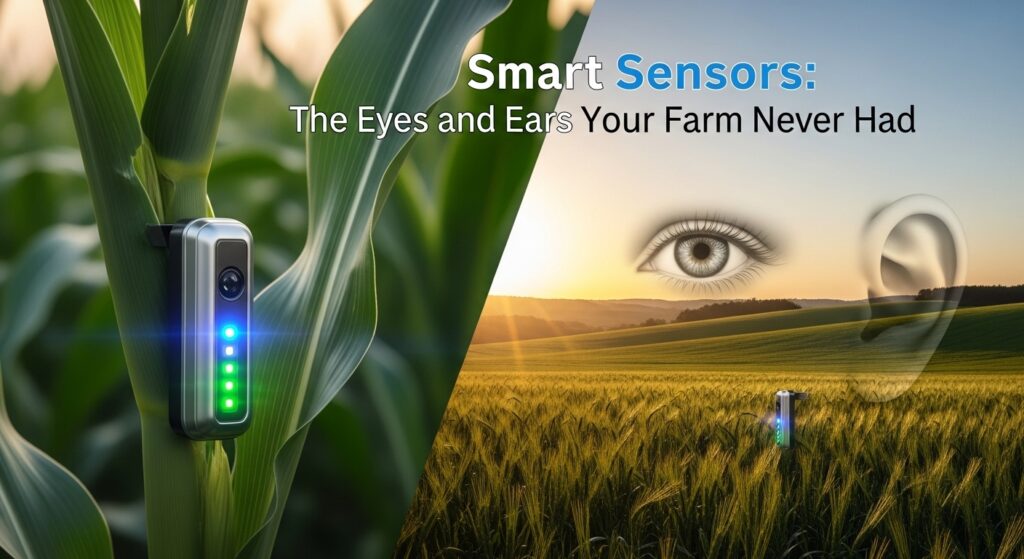
The next stage involves the tools that reduce the need for physical presence. Sensors placed in fields can track soil moisture continuously, without anyone needing to check manually. Alerts can notify a farmer when conditions require attention, rather than the farmer spending hours every day walking the land to find out. Irrigation can be programmed to respond to real data, activating when needed and stopping when it is not.
Drone technology allows a single person to inspect large areas in a fraction of the time it would take on foot. What once required several workers walking separately through a field now takes one flight, delivering visual data that can be reviewed from anywhere. Each of these tools does not eliminate the farmer. It eliminates the repetitive, time-intensive tasks that were consuming the farmer’s capacity, freeing them to make decisions, manage the operation, and plan for what comes next. This is how one person begins to manage what once required ten.
The Limits Are Moving
It is worth being honest about where automation currently stands in agriculture, particularly for smaller farms. Some of these tools are still becoming more accessible. Sensors, drones, and smart irrigation systems carry real costs, and not every farm is ready to adopt them immediately. The path toward the one-person farm is not a single purchase or a single decision, it is a progression.
It begins with organisation. Then data. Then, as the foundation grows stronger, increasingly intelligent tools can be layered on top. Each step is meaningful on its own, and each one makes the next step more achievable. The farms that will benefit most from these technologies are not necessarily the largest ones. They are the farms that start building their digital foundation early and the farms that understand that automation does not begin with a machine. It begins with the clarity to know what your farm actually needs.
Building Toward That Future
At Agrosenix, we work with farmers who are at different points along this journey. Some are just beginning to organise their records digitally. Others are ready to connect those records to smarter operational tools. All of them are moving in the same direction. The one-person farm is not a distant concept reserved for wealthy operations or advanced agricultural regions. It is a practical future that begins with small, deliberate steps taken today.
Technology will not replace the farmer, but it will change what a single farmer is able to accomplish. It can reduce the reliance on a labor force that is increasingly hard to find and make knowledge and skill go further than physical effort alone ever could. Most importantly, it gives the farmer something that has always been scarce: time. Time to think, to plan, and to grow but not just the crops, but the farm itself, building an operation that is ready for the future.
Agrosenix Bring Automation in Agriculture.