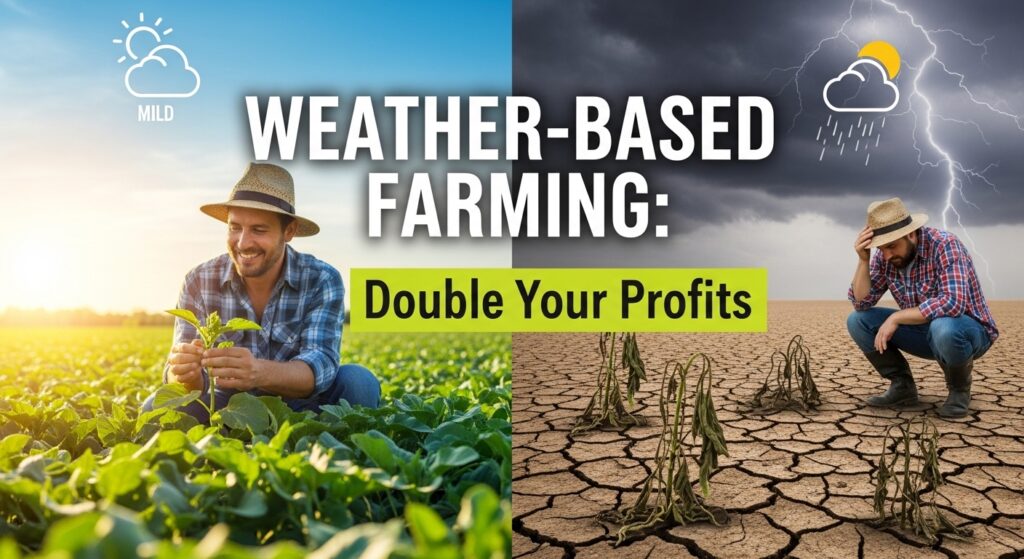
The difference between a profitable season and a devastating loss often comes down to a single decision: when to plant, when to irrigate, when to harvest. And that timing depends entirely on weather you can’t control, but can predict.
Every farmer knows weather matters. But most farmers are still making critical decisions based on gut feeling, tradition, or rough observations rather than precise, data-driven weather intelligence. They plant “around the usual time,” irrigate “when the soil looks dry,” and harvest “when it seems ready.”
This approach worked reasonably well when weather patterns were predictable and stable. But climate change has disrupted traditional patterns. The rains don’t come when they used to. Unexpected dry spells damage crops during critical growth stages. Sudden storms destroy crops ready for harvest.
In this new reality, farmers who integrate weather intelligence into every decision are thriving. Those who don’t are increasingly vulnerable to losses they could have avoided.
The Hidden Cost of Weather-Blind Farming
Consider what happens when you make farm decisions without weather intelligence. You plant based on calendar dates or tradition, then discover the rains were late, your seeds germinate poorly or not at all. You irrigate based on visual soil assessment, either wasting water (and money) on unnecessary irrigation or letting crops stress from insufficient water during dry periods you didn’t anticipate. You apply fertilizer or pesticides, then rain wash them away before they’re absorbed, wasting your investment entirely. You plan to harvest next week, then unexpected rains delay access to fields, reducing crop quality or causing losses. You prepare to spray pesticides when weather conditions actually favor disease development, requiring repeated applications. Without weather insight, you’re making expensive decisions blindly and hoping for luck. Sometimes you get lucky. Often you don’t. These aren’t rare disasters, they’re routine occurrences when farming decisions ignore weather intelligence. The economic impact is enormous, often representing the difference between profit and loss for the season.How Weather Intelligence Transforms Farm Decisions
Weather-based farm management uses forecasts and weather patterns to optimize timing for every critical farming operation. This transforms farming from reactive guesswork to proactive strategy. Here’s how it works for key farm activities:Planting Decisions
Traditional approach: “We usually plant maize in early April” or “The calendar says it’s planting season.” The problem is that calendar dates ignore actual weather conditions, which vary significantly year to year. Planting too early means seeds sit in dry soil failing to germinate, or get washed away by unexpected heavy rains. Planting too late misses optimal growing conditions and shortens your season. Weather-based approach: Agrosenix analyzes current soil moisture, forecasts rainfall probability for the next 10-14 days, predicts temperature patterns for germination, and recommends optimal planting windows with specific dates and reasons. “Plant between April 15-20. The forecast shows reliable rain starting April 17, with warm temperatures ideal for germination. Delaying past April 22 risks insufficient growing season before the October dry period.” This precision timing dramatically improves germination rates, reduces seed waste from failed planting, ensures crops establish properly, and maximizes growing season length. Farmers report 15-30% yield improvements simply from better planting timing based on weather forecasts.Irrigation Timing
Traditional approach: “The soil looks dry” or “We irrigate every X days on a schedule.” This wastes water irrigating when rain is coming soon, stresses crops by under-watering during unexpected dry spells, and costs money on unnecessary pumping and labor. Weather-based approach: “Rain forecast in 2 days (80% probability, 15-25mm expected). Skip today’s planned irrigation. Will reassess after rainfall.” Or alternatively: “No significant rain forecast for next 10 days. Increase irrigation frequency and consider deep watering before the dry period.” This intelligence prevents wasted irrigation hours before rain, optimizes water use based on actual crop needs and upcoming weather, reduces energy costs from unnecessary pumping, and prevents crop stress from unanticipated dry periods. Farmers typically reduce irrigation costs 20-40% while maintaining or improving crop performance through weather-optimized irrigation timing.Fertilizer Application
Traditional approach: Apply fertilizer based on crop stage or calendar schedule, often losing significant investment to rain washing away nutrients before plants absorb them. Weather-based approach: “Optimal fertilizer application window: next 3 days. No rain forecast for 48-72 hours, allowing fertilizer to be absorbed. Heavy rain is expected in 4-5 days, which will water in the remaining nutrients without washing them away.” This timing ensures maximum fertilizer uptake and effectiveness, minimizes loss from rainfall washing, reduces the need for reapplication, and maximizes ROI on expensive fertilizer investments. Proper timing based on weather can increase fertilizer efficiency by 30-50%, meaning you get more plant nutrition per dollar spent.Pest and Disease Management
Traditional approach: React to visible pest damage or spray on calendar schedule without considering whether weather conditions favor disease development or pest pressure. Weather-based approach: “Warning: Extended period of warm, humid conditions forecast for next 7 days. High risk for fungal diseases and increased insect reproduction. Recommend preventive fungicide application and increased pest monitoring.” Weather is the primary trigger for most crop diseases and pest outbreaks. Temperature and humidity combinations create ideal conditions for fungal, bacterial, and viral diseases. Specific weather patterns trigger insect reproduction and migration. Extended wet periods favor certain pathogens while dry periods favor others. By integrating weather forecasts with pest and disease risk models, smart systems can predict problems before they appear and recommend precisely timed preventive interventions.Harvest Timing
Traditional approach: “The crop looks ready, let’s harvest next week” without checking weather forecasts, risking storm damage, quality degradation from unexpected rain, or harvest delays that leave crops overripe. Weather-based approach: “Your coffee is reaching optimal harvest maturity. The weather forecast shows dry conditions for the next 5 days, then a 60% chance of heavy rain starting day 6. Recommend accelerating harvest to complete before rain arrives, preventing quality loss and damage.” This intelligence enables you to harvest during optimal weather windows, avoid crop damage from predicted storms, prevent quality degradation from unexpected moisture, and plan labor and logistics around reliable weather windows. The difference between harvesting a high-quality crop at peak condition versus a damaged, deteriorated crop often comes down entirely to harvest timing relative to weather events.Understanding Weather Forecasts and Probability
One reason farmers underutilize weather forecasts is confusion about how to interpret them. Let’s demystify weather intelligence: Forecast Accuracy by Time Range: Short-term forecasts (1-3 days) are highly reliable, typically 85-90% accurate for major weather events. Medium-term forecasts (4-7 days) are useful for planning, around 70-80% accurate. Long-term forecasts (8-14 days) show general trends, about 60-70% accurate. Smart systems use this tiered reliability to make different types of recommendations, immediate action for short-term forecasts, preparation and planning for medium-term, and strategic positioning for long-term trends. Probability and Risk Management: When you see “60% chance of rain,” that means it will rain somewhere in your area on 6 out of 10 days with similar conditions. For farm decisions, higher probability (70%+) generally warrants action like skipping irrigation or delaying fertilizer application. Moderate probability (40-70%) suggests preparation and monitoring—be ready to act if conditions develop. Lower probability (below 40%) means continue normal operations but stay alert. Smart farm management systems factor these probabilities into recommendations automatically. Rainfall Amount Matters: Light rain (under 5mm) might settle dust but won’t provide meaningful crop water or wash away surface-applied inputs. Moderate rain (5-20mm) provides useful crop moisture and will wash away fresh fertilizer or pesticide applications. Heavy rain (over 20mm) can cause runoff, soil erosion, waterlogging, and crop damage if fields aren’t properly drained. Knowing both the probability AND the expected amount helps you make much better decisions. Temperature Extremes and Crop Stress: Heat stress affects crop productivity and water requirements dramatically. Cold snaps can damage sensitive crops or slow growth. Frost events can be crop disasters requiring protective measures. Smart systems correlate forecast temperatures with crop-specific thresholds to provide targeted alerts and recommendations. Wind Conditions impact pesticide application effectiveness (wind drift wastes chemicals and creates off-target damage), irrigation efficiency (wind increases evaporation), and physical crop damage (strong winds can break stems or damage fruits). Weather intelligence includes wind forecasts to optimize timing for these activities.Microclimate and Localized Forecasts
Generic regional forecasts often miss important local variations. Your farm’s specific microclimate, influenced by elevation, proximity to water bodies, topography, and local vegetation, can differ significantly from regional conditions. Agrosenix uses your precise farm location to provide hyperlocal forecasts that account for your specific microclimate factors. A farm in a valley might have different moisture patterns than hilltop farms just kilometers away. Coastal farms have different temperature patterns than inland locations. Farms near forests might have different wind and temperature patterns than open farmland. These local variations significantly affect optimal farming decisions, and generic regional forecasts miss these nuances. Progressive farmers report that localized forecasts are dramatically more accurate and useful than regional weather reports. “The radio says it’s sunny, but Agrosenix knows my farm is in a valley that gets afternoon rain showers during this season. That specificity changes my decisions about when to spray or irrigate.”Integrating Indigenous Knowledge with Weather Intelligence
Traditional weather forecasting based on natural signs, animal behavior, plant indicators, wind patterns, cloud formations, has value accumulated over generations. Smart weather-based farming doesn’t replace this knowledge; it complements it. The most successful approach combines indigenous knowledge with modern forecasting. Traditional indicators provide qualitative pattern recognition developed over centuries. Modern forecasts provide quantitative predictions and specific timing. Indigenous knowledge suggests when to pay extra attention to certain weather patterns. Weather data provides the precision timing for acting on those insights. Many farmers use traditional signs as a “first alert” that triggers closer attention to modern forecasts, or use traditional knowledge to interpret whether forecast patterns fit historical patterns for the season. This integration respects valuable traditional knowledge while adding precision and advance warning that indigenous methods alone cannot provide.Seasonal Weather Planning
Beyond day-to-day decisions, seasonal weather patterns should inform your entire farm strategy. Smart systems analyze seasonal forecasts and historical patterns to provide strategic recommendations: Planting Strategy: If seasonal forecasts predict a delayed rainy season, recommend later planting dates or drought-tolerant varieties. If an above-normal rainfall season is forecast, suggest crops that thrive in wet conditions and plan for enhanced drainage. If seasonal forecasts predict temperature anomalies, recommend heat-tolerant or cold-hardy varieties accordingly. Crop Selection: Seasonal climate predictions should influence which crops you plant. Warmer-than-normal seasons favor certain crops while stressing others. Wetter or drier than average seasons dramatically affect which crops are most likely to succeed. Progressive farmers adjust their crop mix based on seasonal forecasts rather than blindly planting the same things every year regardless of forecasted conditions. Water Management Planning: Seasonal forecasts allow proactive water management. If a drier-than-normal season is forecast, increase water storage capacity, prioritize water-efficient crops, plan for supplemental irrigation, and reduce water-intensive crops. If a wetter-than-normal season is predicted, improve drainage, avoid waterlogging-sensitive crops, and plan for potential disease pressure from excess moisture. Financial Planning: Understanding likely seasonal conditions helps financial planning. Budget for increased irrigation costs if the dry season is forecast. Plan for higher pest/disease management costs if conditions favor these problems. Adjust crop selection toward more profitable crops given forecasted conditions. This turns seasonal forecasts into strategic planning tools for your entire farm business.Real-Time Weather Alerts and Emergency Response
Beyond planning, real-time weather alerts enable emergency response to protect crops and investments from sudden weather threats. Storm Warnings: “Severe thunderstorm with high winds and potential hail forecast to arrive in 4-6 hours. Recommend: harvest any ready crops immediately, secure equipment and materials, delay planned pesticide application, ensure drainage systems are clear.” Frost Alerts: “Temperatures forecast to drop below 2°C tonight, frost risk for your sensitive tomato and pepper crops. Recommend immediate protective measures: row covers, irrigation (wet soil retains heat), or harvest if crops are mature enough.” Heat Wave Warnings: “Extended period of temperatures above 38°C forecast for next 5-7 days. Heat stress risk for crops and workers. Recommend increased irrigation frequency, afternoon shading for sensitive crops, adjust work schedules to avoid midday heat.” Flood Warnings: “Heavy persistent rain (100mm+) forecast over next 24-48 hours. Flooding risk for low-lying fields. Recommend harvest of any mature crops, clear drainage channels, move equipment to higher ground, prepare emergency drainage.” These real-time alerts enable protective action that can save entire crops or prevent enormous losses. The difference between receiving a storm warning 6 hours in advance versus discovering the damage afterward can easily be thousands of dollars in prevented losses.Technology: How Weather Intelligence Works
Agrosenix weather intelligence integrates multiple data sources and analytical layers to provide actionable recommendations. The platform accesses multiple weather forecast sources including national meteorological services, global forecast models, and satellite data, then synthesizes these into a comprehensive forecast. Location-specific forecasting uses your exact farm coordinates to provide hyperlocal predictions that account for microclimate factors like elevation, topography, and local features. Historical weather pattern analysis compares current forecasts with historical patterns for your location to provide context and identify unusual conditions worth noting. Crop-specific interpretation connects weather conditions to crop needs and vulnerabilities. The system knows which weather conditions affect which crops at which growth stages, providing relevant alerts and recommendations tailored to what you’re actually growing. Farm activity recommendations integrate forecasts with your planned activities, if you’ve scheduled irrigation, the system checks forecasts and recommends adjustment if rain is coming. All of this analysis produces clear, actionable guidance delivered through simple notifications. You don’t need to interpret raw meteorological data; you receive specific recommendations: “Delay irrigation,” “Optimal fertilizer window,” “Harvest urgently before storm,” backed by the weather reasoning that supports each recommendation. The system works offline, forecast data downloads when connectivity is available, then provides recommendations offline. You’re never blocked from accessing critical weather intelligence due to poor internet in rural areas.Implementing Weather-Based Farming This Week
Day 1: Enable weather intelligence in your farm management app by confirming your exact farm location (enables hyperlocal forecasts), entering your current crops and growth stages (enables crop-specific recommendations), and enabling weather alert notifications (ensures you receive critical warnings). Day 2-3: Start checking forecasts daily by reviewing the 7-day forecast each morning before planning your day’s activities, noting any significant weather events in the forecast, and considering how forecasted conditions affect your planned work for the day. Day 4-7: Make your first weather-informed decision by choosing one planned activity (irrigation, fertilizer application, harvest, spraying) and adjusting timing based on the forecast. Document what you changed and why. Note the outcome, did the forecast prove accurate? Did your timing adjustment produce better results? Week 2+: Expand weather-based decision making by systematically checking forecasts before all major farm decisions, responding promptly to weather alerts, and tracking outcomes of weather-informed decisions versus traditional timing. End of Season: Evaluate impact by comparing your season results with neighbors who don’t use weather intelligence, quantifying cost savings from avoided waste (irrigation, fertilizer, pesticides), and calculating prevented losses from weather-protected harvest timing and storm avoidance.The Competitive Advantage of Weather Intelligence
Farming is increasingly competitive. Input costs rise, crop prices fluctuate, and climate change makes weather more unpredictable. In this environment, farmers who use every available tool gain significant advantage over those farming the traditional way. Weather intelligence provides that advantage. You reduce waste and optimize inputs (20-40% cost savings are typical). You increase yields through better timing decisions (10-30% yield improvements from optimized planting, irrigation, and harvest timing). You avoid losses through advance warnings (storm damage, pest outbreaks, disease pressure). You make confident decisions backed by data rather than guesswork. Meanwhile, farmers without weather intelligence continue accepting preventable losses as “bad luck” or “unpredictable weather.” They waste money on poorly timed inputs. They miss optimal windows for critical operations. They don’t know when problems are coming until it’s too late. The gap between weather-informed farmers and traditional farmers grows wider each season as climate becomes less predictable. Traditional patterns your grandfather relied on no longer hold. The farmers who adapt by integrating weather intelligence will thrive. Those who don’t will struggle.Your Farm Deserves Weather Intelligence
You can’t control the weather. But you can predict it, prepare for it, and time your decisions to work with weather instead of against it. The technology to transform your farming with weather intelligence already exists. It fits in your pocket. It works offline. It’s designed specifically for smallholder and family farmers, not just large commercial operations with their own meteorologists. The question isn’t whether weather intelligence helps, the evidence is overwhelming. The question is: how much money are you losing each season by farming without it?Farm Smarter with Agrosenix Weather Intelligence
Agrosenix brings professional weather intelligence to every farmer through hyperlocal forecasts specific to your exact farm location, crop-specific recommendations that connect weather to what you’re actually growing, real-time alerts for storms, frost, heat waves, and critical conditions, optimal timing guidance for planting, irrigation, fertilizer, spraying, and harvest, seasonal forecasting to inform strategic crop selection and planning, and offline functionality so you access weather intelligence even without internet. Download Agrosenix today and start making weather-informed decisions. Your smartphone is already in your pocket. Put it to work giving you weather intelligence that can double your profits. Stop guessing about the weather. Start knowing, and profiting. Ready to transform your farming with weather intelligence? Download the Agrosenix beta app and enable weather alerts today. Free during beta. Works offline. Weather intelligence designed for real farmers. The weather is changing. Make sure your farming adapts.FAQ:
1. What is weather-based farming?
Weather-based farming uses forecasts, climate data, and localized weather patterns to guide critical farming decisions such as planting, irrigation, fertilization, pest management, and harvest timing.
2. How does weather intelligence improve farm profits?
By optimizing timing for planting, irrigation, fertilizer application, and harvest, farmers reduce input waste, prevent crop losses from adverse weather, and increase yields, often improving profits by 10–30% or more.
3. Can small farms benefit from weather-based decisions?
Yes. Even smallholder and family farms can use hyperlocal weather forecasts to make precise decisions, reduce costs, and avoid losses, without needing large-scale infrastructure.
4. How accurate are weather forecasts for farming?
Short-term forecasts (1–3 days) are highly accurate (85–90%), medium-term forecasts (4–7 days) are moderately accurate (70–80%), and long-term forecasts (8–14 days) show trends (60–70%). Smart farming systems account for these probabilities in their recommendations.
5. Which farming activities benefit most from weather intelligence?
Planting, irrigation, fertilizer application, pest and disease management, and harvest timing all benefit significantly. Each activity can be optimized to save costs, improve yield, and reduce risks.
6. How does weather intelligence work with traditional knowledge?
Modern weather forecasts complement indigenous knowledge of natural signs, animal behavior, and seasonal patterns. Combining both allows farmers to make precise, well-timed decisions while respecting long-standing expertise.
7. How do I start using weather-based farming this season?
Enable a weather intelligence platform like Agrosenix with your farm location and crops, start checking daily forecasts, make one weather-informed decision per week, track results, and gradually expand to all farm operations.